The Best Month to Surf in Bali (Honestly)
There's no single "best" month to surf in Bali, there's a best month for *you*, depending on what you ride, where you stand on the learning curve, and how much you hate crowds. Here's the honest breakdown.
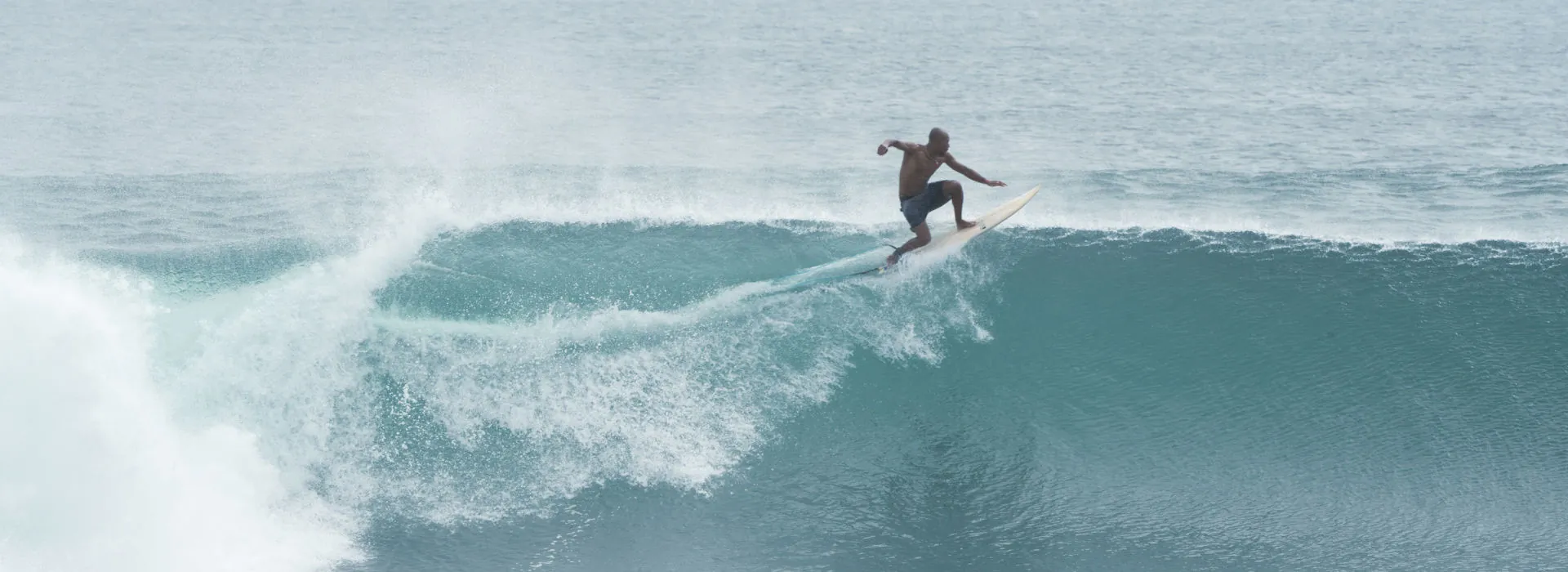
Ask ten surfers what the best month to surf in Bali is and you'll get three confident answers and a shrug. That's because the question hides a second question: best for whom? A nervous first-timer chasing soft whitewater wants the opposite of what a tube-hunting intermediate wants. So before I give you a month, let me give you the logic, then you can pick the month that actually fits.
The short answer: May, June, and September
If you held a board to my head and demanded one window, I'd say May through September, with the sweet spot being late May to mid-June and again in September. Here's why those shoulder weeks beat the obvious July–August peak:
- The swell is consistent. The dry-season trade winds and Indian Ocean groundswells are firing.
- The wind is offshore on the west coast in the mornings. Clean faces, groomed walls.
- The crowds haven't fully detonated yet. July and August bring European summer holidays and the lineups show it.
But that's the answer for someone who already surfs. If you're a beginner, the calendar tilts the other way, and I'll get to that. First, you have to understand Bali's two seasons, because everything flows from them.
Bali has two surf seasons, not twelve months
Bali sits between two coastlines that get opposite weather. Forget thinking month-by-month and start thinking season-by-season.
Dry season (April–October): the west coast's time
This is the famous Bali. Southeast trade winds blow offshore onto the west and southwest-facing breaks, Uluwatu, Padang Padang, Bingin, Canggu, Kuta, Balangan. Mornings are glassy, the Indian Ocean pumps reliable swell, and the water is warm. This is the season the magazine photos come from. The trade-off is people: this is also when the whole surfing world shows up.
Wet season (November–March): the east coast wakes up
When the monsoon swings the wind to the west and northwest, the west coast goes onshore and choppy by mid-morning. But the east coast, Nusa Dua, Sanur, Keramas, Serangan, now gets the clean offshore treatment. The wet season gets unfairly trashed. Yes, you'll get rain (usually in heavy afternoon bursts, not all-day drizzle), but mornings can be spectacular and the lineups are a fraction of dry-season density. Keramas in December with a decent swell and a sunrise session to yourself is one of the great underrated Bali experiences.
What is the best month to surf in Bali for beginners?
This is where the standard advice gets it backwards. Beginners are constantly told "come in dry season because that's when Bali is best." But best for advanced surfers often means worst for beginners, bigger, heavier, more crowded waves over reef.
For learning, you want smaller, gentler, less crowded conditions and forgiving sand bottoms. That points you toward:
- October and April (the shoulder months): The dry-season power is winding up or down, so beach breaks like Kuta, Legian, and Seminyak serve up manageable, rolling whitewater. Crowds are thinner. This is my top recommendation for a first surf trip.
- The wet-season months (November–March): Genuinely underrated for beginners. Mornings are often calm, the popular beginner beaches around Kuta still work, and you're not fighting for space. The rain mostly comes after lunch, perfect timing for a post-session nap.
What you want to avoid as a beginner is July and August at the heavy reef breaks. Not because you'd surf them, you wouldn't, but because the whole coast is busy, lesson prices climb, and even the beach breaks get packed with other learners. If you can only travel in peak season, that's fine; just book lessons early and surf at dawn.
If you're weighing whether Bali is even the right place to learn at all, we wrote an honest take on that exact question, short version: yes, but with caveats about the reef.
What is the best month to surf in Bali for intermediates?
Intermediates are the people who benefit most from the classic answer. You can handle real waves, you're not advanced enough to want triple-overhead Uluwatu on a big day, and you want clean, rippable walls with enough size to be fun.
Target May, June, and September. Here's the case for each:
- May: The season is opening up. Swells are building but rarely maxed out, so you get chest-to-head-high faces at spots like Canggu, Balangan, and the inside sections of Uluwatu without the August chaos.
- June: Arguably the all-rounder's best month. Reliable swell, clean offshore mornings, water around 27°C, and crowds that are present but not yet brutal.
- September: The back-end sweet spot. The Indian Ocean is still delivering long-period groundswell, but the European holiday crowds have mostly gone home. Some of my best Bali sessions have been mid-September.
If you want to confirm what's actually coming during your window, the swell forecasts on Surfline's regional Bali pages are the standard most traveling surfers check, they break down swell period, size, and wind by individual spot, which matters far more than a generic "best month" list.
What are the best and worst months to go to Bali?
Let me separate surfing from general travel, because they don't perfectly overlap.
Best months overall for surfing: May, June, September. Strong, clean, manageable, and not yet a circus.
Best for budget and quiet: February, March, October, shoulder and wet-season weeks. Cheaper flights, cheaper rooms, emptier lineups. I find this period genuinely peaceful.
The "worst" months, with an asterisk:
- July and August aren't worst for waves, the surf is excellent. They're worst for crowds and cost. Accommodation spikes, lineups are stacked, and the famous reefs are full of egos and dropped-in waves.
- January is the wettest, windiest month. The west coast is often blown out and even the east coast can get messy. It's the one month I'd hesitate to plan a dedicated surf trip around, though you can still score early mornings.
None of these are truly "bad." Bali always has a rideable coast. But if you want the cleanest probability-of-good-surf for the least friction, you circle May, June, and September on the calendar.
Is Bali surfing crowded?
Honestly? Yes, and you need to plan around it rather than pretend otherwise.
The marquee dry-season breaks (Uluwatu, Padang, Bingin, Canggu) can hold 50 to 100+ people in the water on a good July day. Drop-ins, paddle battles, and frustration are real. But the crowd problem is solvable with three habits:
- Surf at dawn. The 6–8am window before the buses arrive is a different ocean. I cannot overstate this. Half the crowd complaints in Bali come from people who paddled out at 10am.
- Go beyond the postcard spots. The Bukit Peninsula and the east coast hold dozens of breaks. Move 20 minutes from the famous one and the numbers thin out fast.
- Travel in the shoulders. The crowd difference between June and August at the same spot is staggering, same waves, half the people.
The Reddit consensus, for what it's worth, leans the same way: regulars there repeatedly recommend May/June and September specifically to dodge the peak-season crush while keeping the good swell.
Where do surfers go in Bali?
Quick geography, because "best month" means nothing without knowing where to point yourself:
Bukit Peninsula (southwest tip)
Uluwatu, Padang Padang, Bingin, Impossibles, Balangan, Dreamland. World-class reef breaks, mostly intermediate-to-advanced, best in dry season. This is the pilgrimage zone.
Canggu & Kuta region (west coast)
Beach and reef breaks suited to a wide range of abilities. Canggu (Echo Beach, Berawa) is the hub for the digital-nomad-meets-surfer crowd. Kuta and Legian are the classic learner beaches.
East coast (Sanur, Nusa Dua, Keramas, Serangan)
Comes alive in wet season. Keramas is a high-performance right-hander that's hosted pro contests. Sanur and Nusa Dua have reef setups that reward the right swell.
If you're trying to assemble an actual itinerary around these zones, our complete Bali surf trip guide walks through how to chain spots together by season and where to base yourself.
Do I need a wetsuit to surf in Bali?
For the vast majority of people: no. Bali water temperatures sit between roughly 26°C and 29°C (79–84°F) year-round. Boardshorts or a swimsuit and a rash guard are all you need for sun and chafe protection.
A few exceptions worth knowing:
- If you're doing dawn-till-dusk multi-hour sessions, a 1mm shorty or springsuit adds comfort and prevents the cumulative chill some people feel after hours in the water.
- A long-sleeve UV rash guard is the single most useful piece of "wetsuit-adjacent" gear here, the equatorial sun is no joke and reef cuts plus sunburn ruin trips.
For the full rundown of what's actually worth bringing, we made a Bali packing list that errs toward "leave the wetsuit at home, bring reef booties and zinc."
Putting it together: pick your month
Let me collapse all of this into a clean decision:
- You're a beginner → October or April (shoulder season) for the best mix of small waves and low crowds. Wet season also works fine for learning if you're on a budget.
- You're an intermediate chasing the best all-round surf → May, June, or September. June if you want one safe bet.
- You want the biggest, heaviest dry-season swell and don't mind crowds → July–August, but commit to dawn patrol.
- You want quiet and cheap and you'll follow the wind to the east coast → November, February, March.
- You specifically asked about December → it's wet season, so think east coast (Keramas, Sanur) and early mornings, and it's surprisingly good if you do.
One last note on the December question, since "best surf in Bali in December" is a search people make constantly: don't let the rain headlines scare you off. December lineups are emptier, the east coast can be genuinely excellent, and a well-timed dawn session before the afternoon downpour is some of the most relaxed surfing you'll do in Bali. There's a reason a lot of seasoned travelers quietly prefer it, and a reason surfing's stress-lowering effect hits harder when you're not jostling 80 people for a wave.
If cost is part of your calculus, and December and the shoulder months are where the savings live, we broke down what a trip actually runs in our line-by-line 2026 budget. Pair the right month with the right week and Bali rewards you whatever your level.